**Please note that this page may contain affiliate links. As an Amazon Associate, I earn from qualifying purchases. This is at no extra cost to you.**
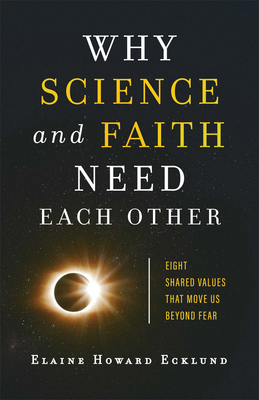
We have a lot in common after all.
As both a scientist and a “religious person,” Elaine Howard Ecklund’s research focus is particularly interesting to me: what scientists and religious people think about each other (and also what they think the other thinks about them).*
In Why Science and Faith Need Each Other, she answers the question, “So, what do we do with this information?” by identifying eight values that science and faith have in common.
One of the things that I believe makes science-faith debates so volatile is the tendency to catastrophize and dehumanize. To expect that the “other side” will cause problems for us. To name them as a threat. To defend our position and our goals by painting “them” as some sort of monster. Ironically, I think this happens because scientists and people of faith are similar in that they place a lot of value on these topics. They’re both passionate.
But of course, catastrophize-and-dehumanize does not facilitate productive discussion, debate, or problem-solving. We must find a way to see each other eye-to-eye.
“Fear doesn’t have to lead to anger and alienation. We can take a step back, respond less rashly, think more clearly and wisely, and work to improve the relationship we have with science.”
Elaine Howard Ecklund, Why Science and Faith Need Each Other
Elaine Howard Ecklund, through this book, leads the way. A must-read for anyone who thinks of themselves as religious or science-minded!
Have you read Why Science and Faith Need Each Other? If so, tell me in the comments which virtue stood out to you most or DM me @science.magnifies on Instagram!
*Her other works–Science vs. Religion and Religion vs. Science–outline her findings in detail. After reading them cover-to-cover, I still find myself referencing them both.
 Science Magnifies