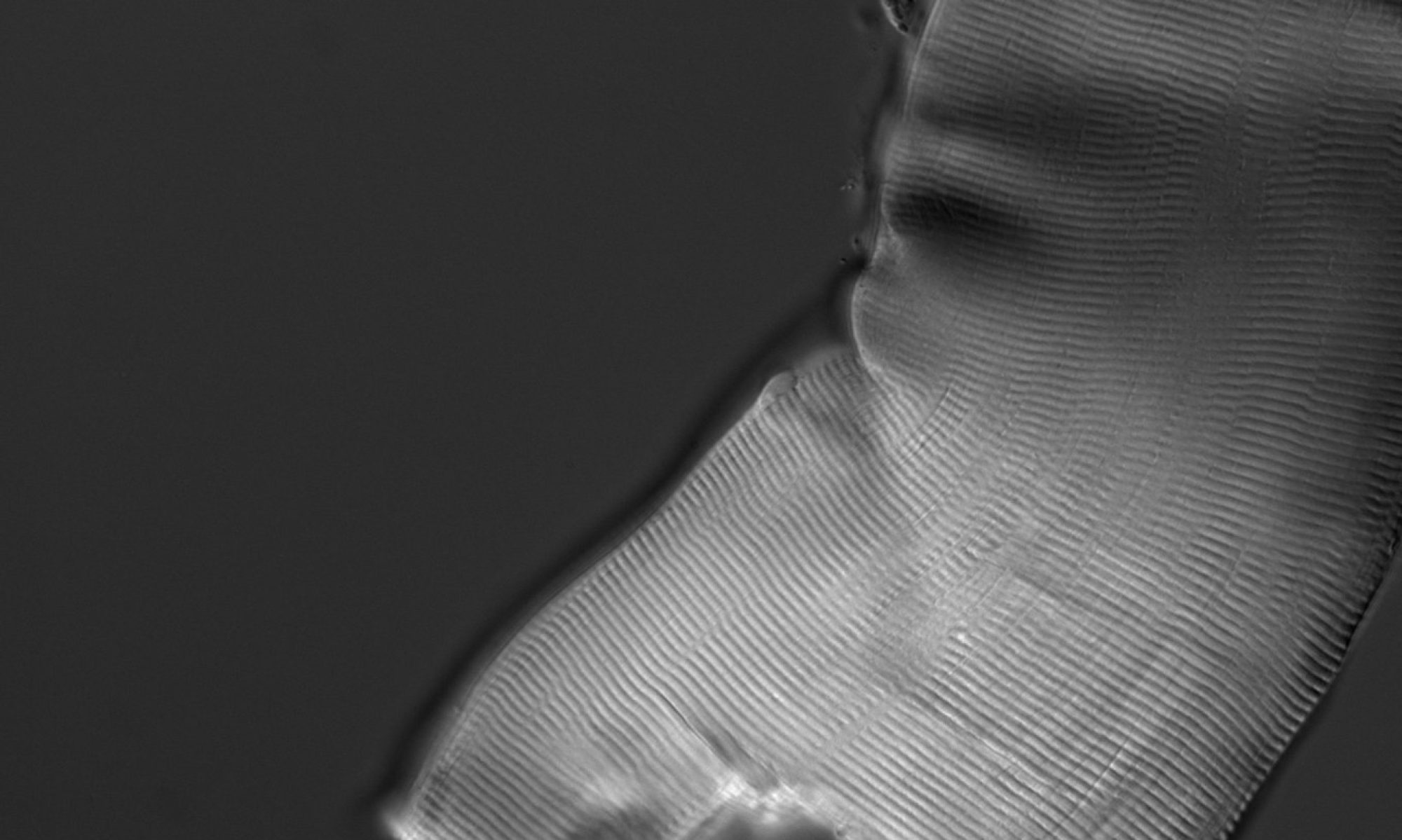
Scripture describes Jesus Christ as being both fully God and fully human. So, while Jesus as God the Son has existed since before the creation of the world (John 1:1-4), when little baby Jesus was conceived here on earth, he took on a physical body (Hebrews 2:17-18).
Physical Body, Chemical Parts
Human bodies are made of chemicals, thus, Jesus was made of chemicals. His physical body isn’t said to be unique; if anything, it was remarkably average (Isaiah 53:2).
Jesus had DNA providing instruction for the construction and maintenance of his cells.
Jesus had phospholipid bilayer membranes defining his cells’ components, and more lipid membranes defining his organelles.
Jesus had proteins of all kinds, from motor proteins powering his muscles to collagen cushioning his joints.
Jesus had mRNA, tRNA, and ribosomes constantly building those proteins. Chaperones helping those proteins fold properly. Proteases breaking them down when their jobs were done.
Jesus had a metabolic system, glycolysis, the TCA cycle and all, generating energy from his food.
Jesus had hormones coordinating his body systems to sleep and digest food and react to stress.
Jesus had neurotransmitters moving between his nerve cells, relaying physical senses of touch and taste and sound and light and smells, forming memories, maintaining his heart rate, influencing his emotions.
Jesus, fully human, had all the biochemistry that you and I have.
Biomolecules Are Fundamentally Good
Not only was Jesus fully human, but he was the perfect and complete human (Hebrews 4:15, 7:26-28). Fully God, he is also fully good. Therefore, Jesus’ biochemistry was perfect and complete, fully good.
DNA and lipid membranes and proteins and RNAs and metabolisms and hormones and neurotransmitters and all biomolecules are fundementally good things. While they may sometimes malfunction in our imperfect bodies, they themselves are not evil. Biomolecules and all the ways they work together are life-giving gifts from God. And we can be sure of this through the incarnation of Jesus.
 Science Magnifies