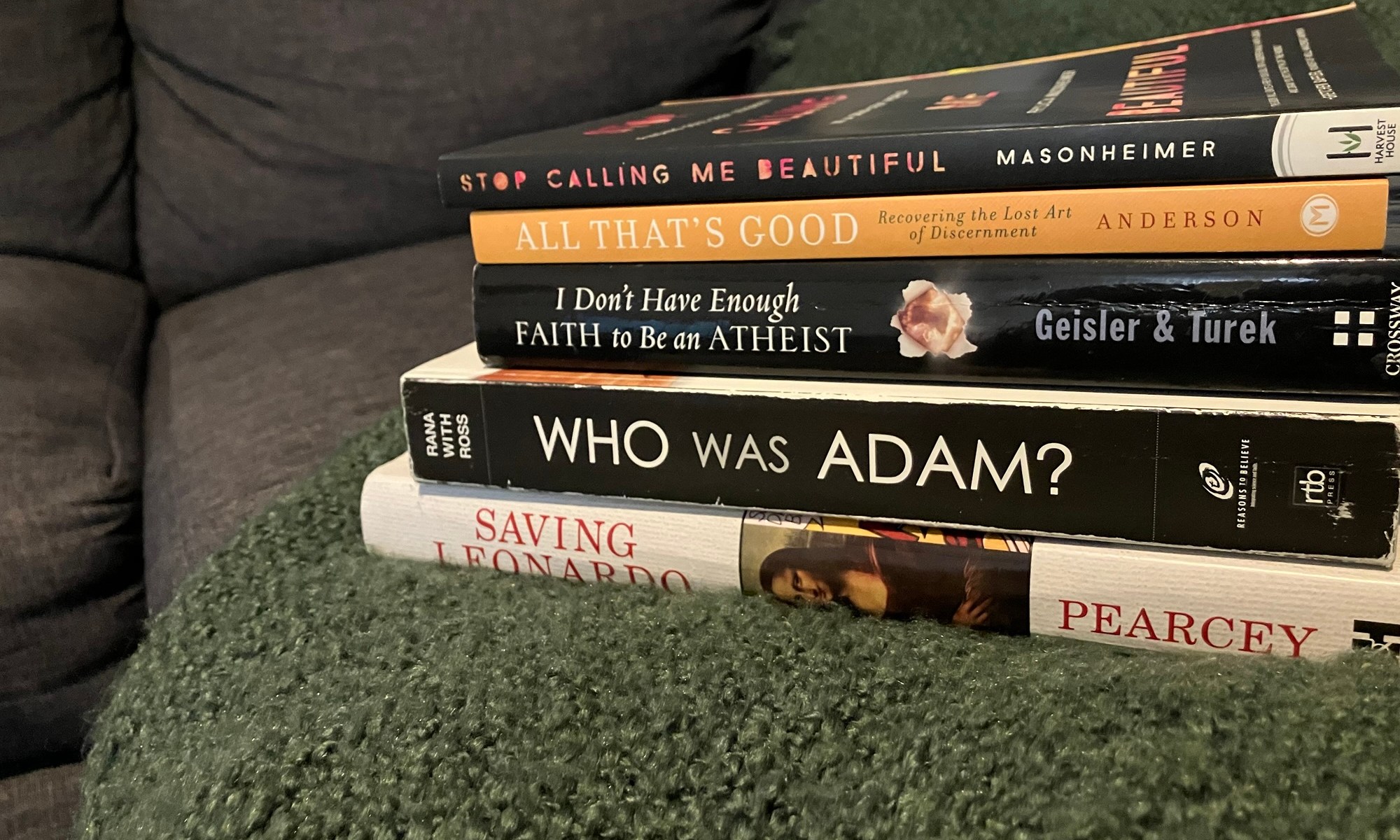
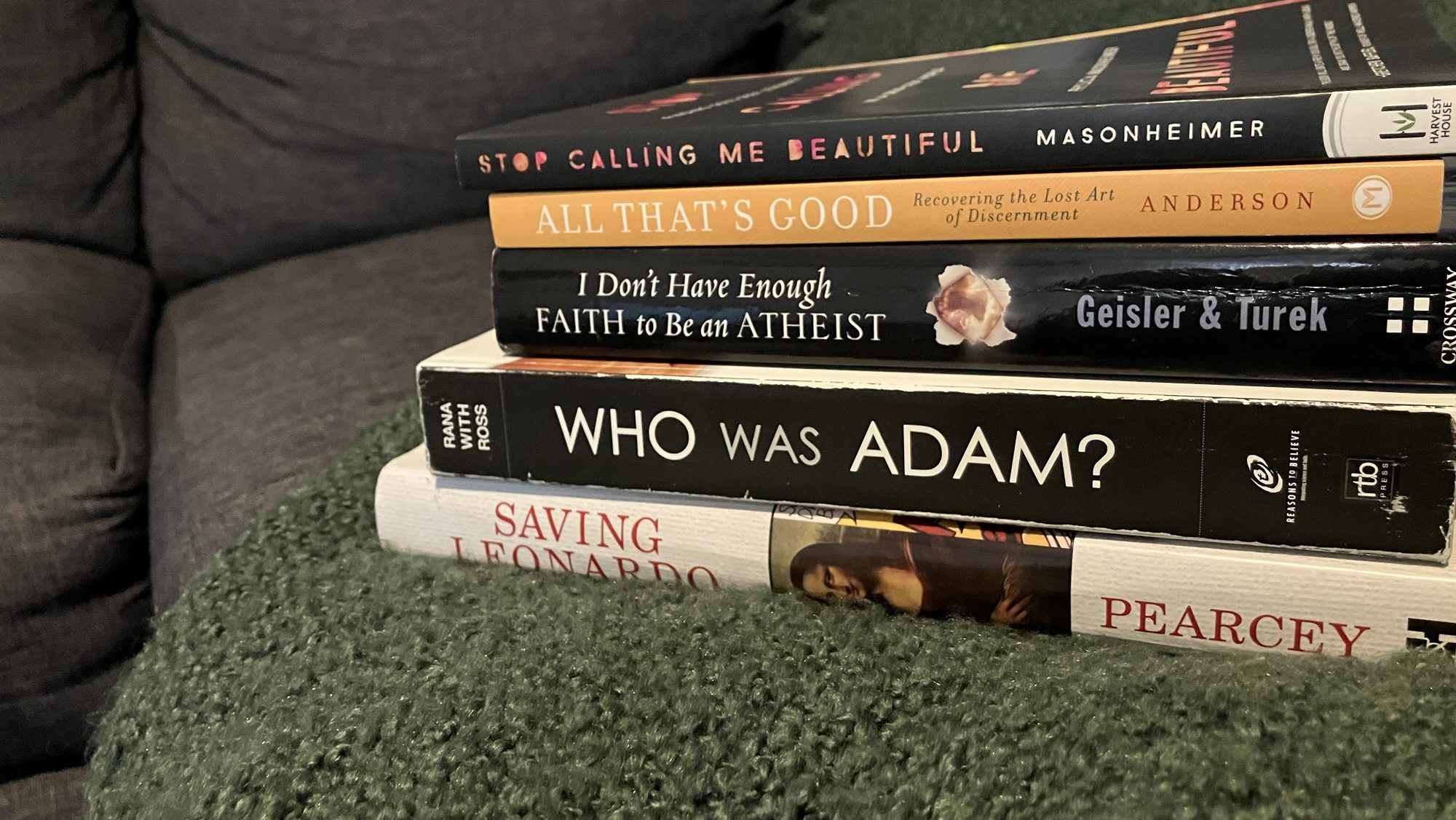
Obviously, all Christians (and non-Christians) have a brain, but some like to challenge it more than others. I enjoy reading books that make me think, especially about how faith in Jesus impacts our thinking. If you also love Jesus and thinking about thinking, here are five books I recommend:
1. I Don’t Have Enough Faith to Be an Atheist, Frank Turek and Norman Geisler
These two men are some of the most highly influential in the field of Christian apologetics, and for good reason. Turek’s ministry CrossExamined.org offers numerous resources for defending the faith. Geisler went to be with the Lord in 2019, but not without leaving behind a library’s worth of works in apologetics and systematic theology. In I Don’t Have Enough Faith to Be an Atheist, Turek and Geisler answer the question, “How do we know Christianity is true?” starting with God’s existence and culminating with the reliability of the Bible. As the title implies, atheism turns out to be quite a long shot in the face of the evidence presented.
Why it’s good for Christians with a brain: Presents a full, evidence-based case for the Christian faith that equips readers to “always be ready to make a defense to anyone who asks you for a reason for the hope that is in you.” (1 Peter 3:15)
2. All That’s Good: Recovering the Lost Art of Discernment, Hannah Anderson
Pastor’s wife and Christian writer Hannah Anderson’s book All That’s Good was one I wanted to tell everyone about before I even finished reading it. In a world that emphasizes so-called “free thinking” while criticizing Christians for blind faith, this book calls the church to use their brains in faith. All That’s Good points us away from seeking answers to what to think and towards learning how to think. When we take God’s word as our guide for how to think, we call this “discernment.” Anderson defines discernment as “a taste for what’s good,” (the title’s inspiration) and teaches readers how to develop such a taste using the structure of Philippians 4:8.
Why it’s good for Christians with a brain: Engages with the balance of thinking for ourselves (and thinking at all) and aligning with God’s wisdom.
3. Saving Leonardo: A Call to Resist the Secular Assault on Mind, Morals, and Meaning, Nancy Pearcey
Truly, I would put any of Nancy Pearcey’s works on this list. The woman just could not write something trivial if she tried. But since I am still working through the Nancy Pearcey book tower, I’ll tell you that Saving Leonardo (which I have read) really got my brain working. I actually couldn’t read it at night because of how much thinking it required of me! I loved it. (You can read a more thorough review of it here). Saving Leonardo introduces readers to the concept of the fact-value split, a philosophy most of us have adopted that puts “facts” and “values” into opposite categories. With this split in mind, Pearcey shows us how we can see the split enter societal thinking through art, music, and literary history. Art reveals what people think!
Why it’s good for Christians with a brain: Provides a philosophical framework for interpreting worldview messages subtly communicated by various media in our current culture.
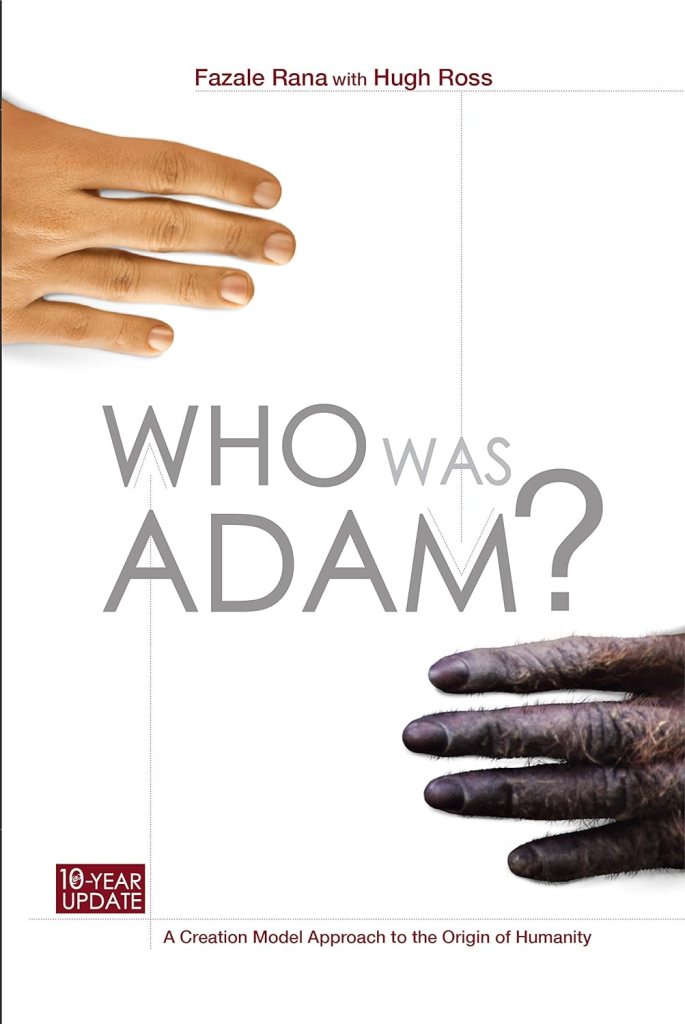
4. Who Was Adam?: A Creation Model Approach to the Origin of Humanity (2015), Fazale Rana
Dr. Fazale Rana currently serves as the president of Reasons To Believe, an organization that uses scientific advancements to point people to faith in Jesus. RTB’s staff scholars (including Dr. Rana and perhaps most notably, Dr. Hugh Ross) have numerous books covering a variety of science-faith topics. I had the privilege of going through Who Was Adam? With Dr. Rana through my seminary studies and it did not disappoint. Who Was Adam? surveys what we know about human origins through paleontology and asks, “Does this data fit with what scripture tells us about our origins?” No data are left out, and what makes this book different from others seeking to integrate science and scripture is that Dr. Rana does not simply say, “Science and scripture can go together.” He shows that science independently points to biblical claims about human origins.
Why it’s good for Christians with a brain: Examines the nitty gritty problem of human origins down to the data so that readers be educated, scientifically vigorous participants in the controversial Adam-and-Eve conversation.
5. Stop Calling Me Beautiful: Finding Soul-Deep Strength in a Skin-Deep World, Phylicia Masonheimer
You may be familiar with Phylicia Masonheimer from her relatively new book, Every Woman A Theologian (which still sits in my ever-lengthening to-be-read list), or from her podcast, “Verity,” or any number of her other works. One thing you’ll know right away about her is that she has a passion for encouraging women to study the things of God deeply. Stop Calling Me Beautiful calls out the trends in women’s ministry that assume that inspiring-but-shallow platitudes meet women’s greatest spiritual needs and that women don’t want–or need–intellectually challenging engagement with scripture. Masonheimer reminds readers that women are not exempt from loving the Lord with all their minds (Matthew 22:37) and that obeying this command blesses our relationship with Jesus.
Why it’s good for Christians with a brain: Identifies a major source of frustration for female Christians with a brain, giving language to describe the problem and direction to a solution.
I could list more titles, and maybe I will in the future, but I hope this inspires you to pick up a book and engage your brain. Our brains are gifts from God, so let’s delight in using them well!
Is there a book that engaged your brain and your faith missing from this list? Tell me about it in the comments or DM me on Instagram @science.magnifies!
*These recommendations are not sponsored, nor do I benefit in any financial way by sharing them with you.
 Science Magnifies