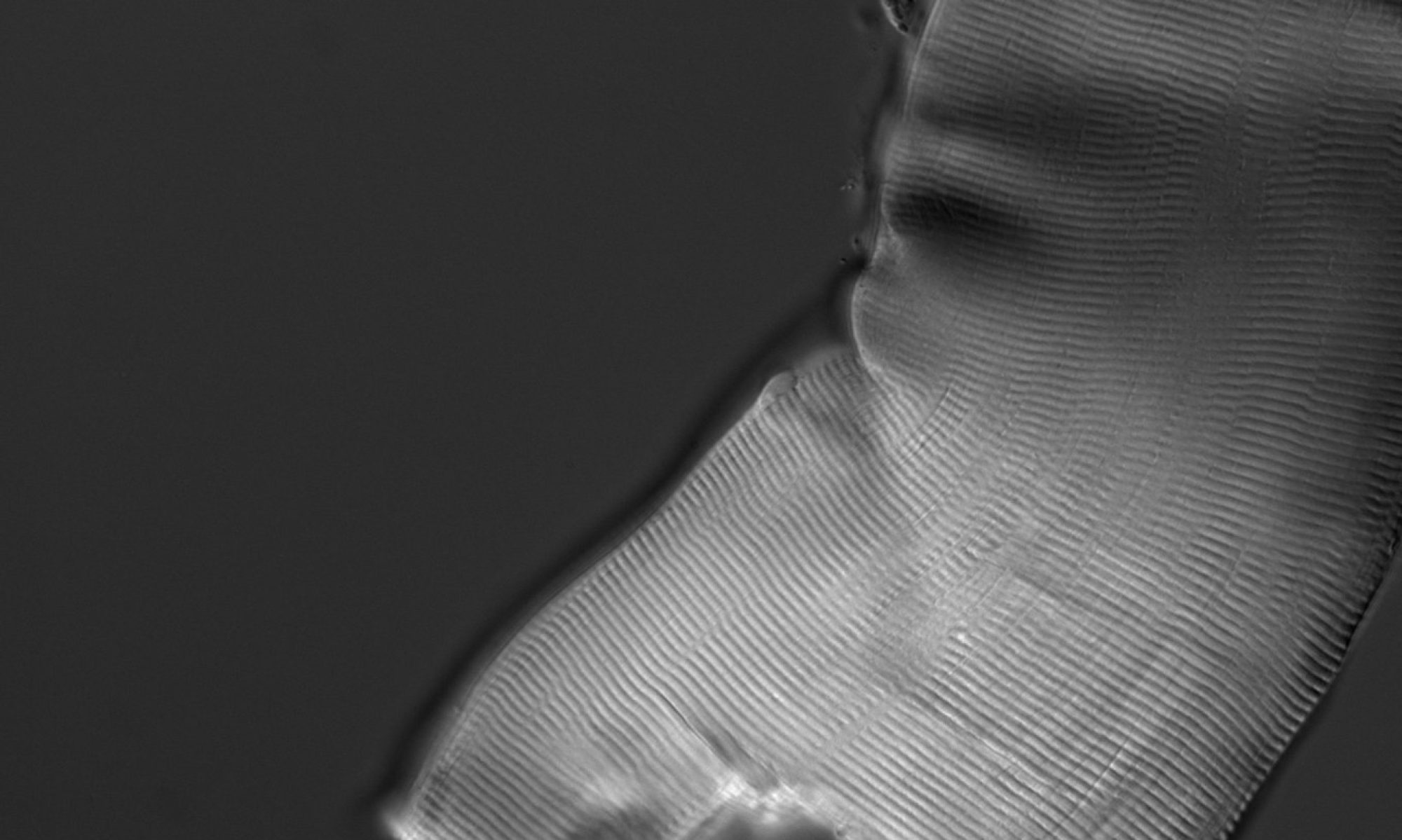
Scientists nickname Connexin-43 “Cx43” or sometimes “GJA1” (gap junction A1). You know how the uterus has to contract all at once during labor? Or how whole chambers of the heart need to contract together to pump blood? Cx43 is a critical protein for making that happen!
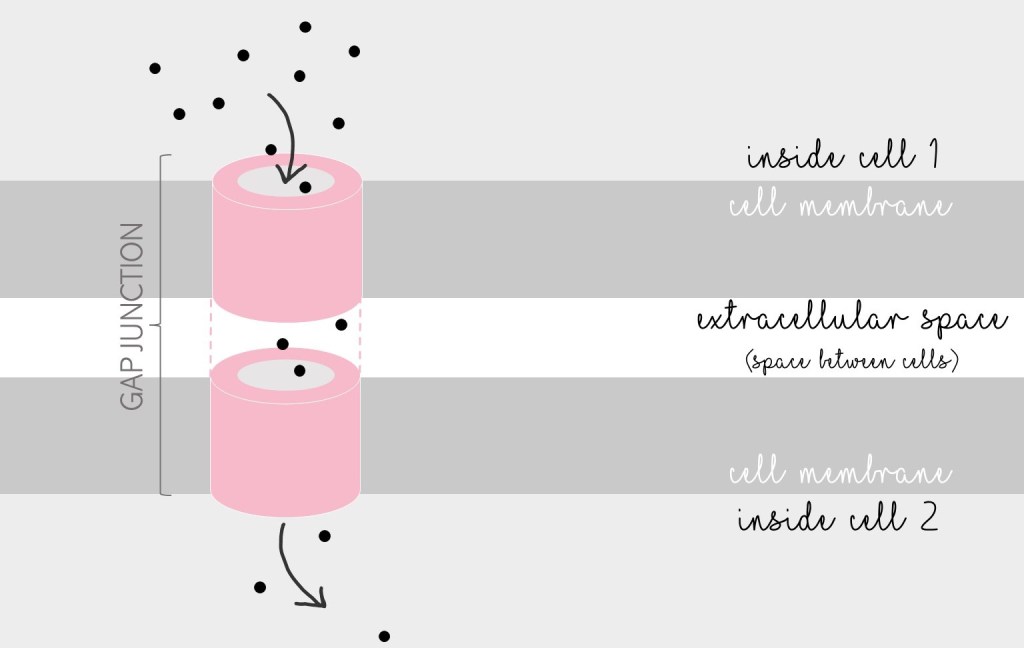
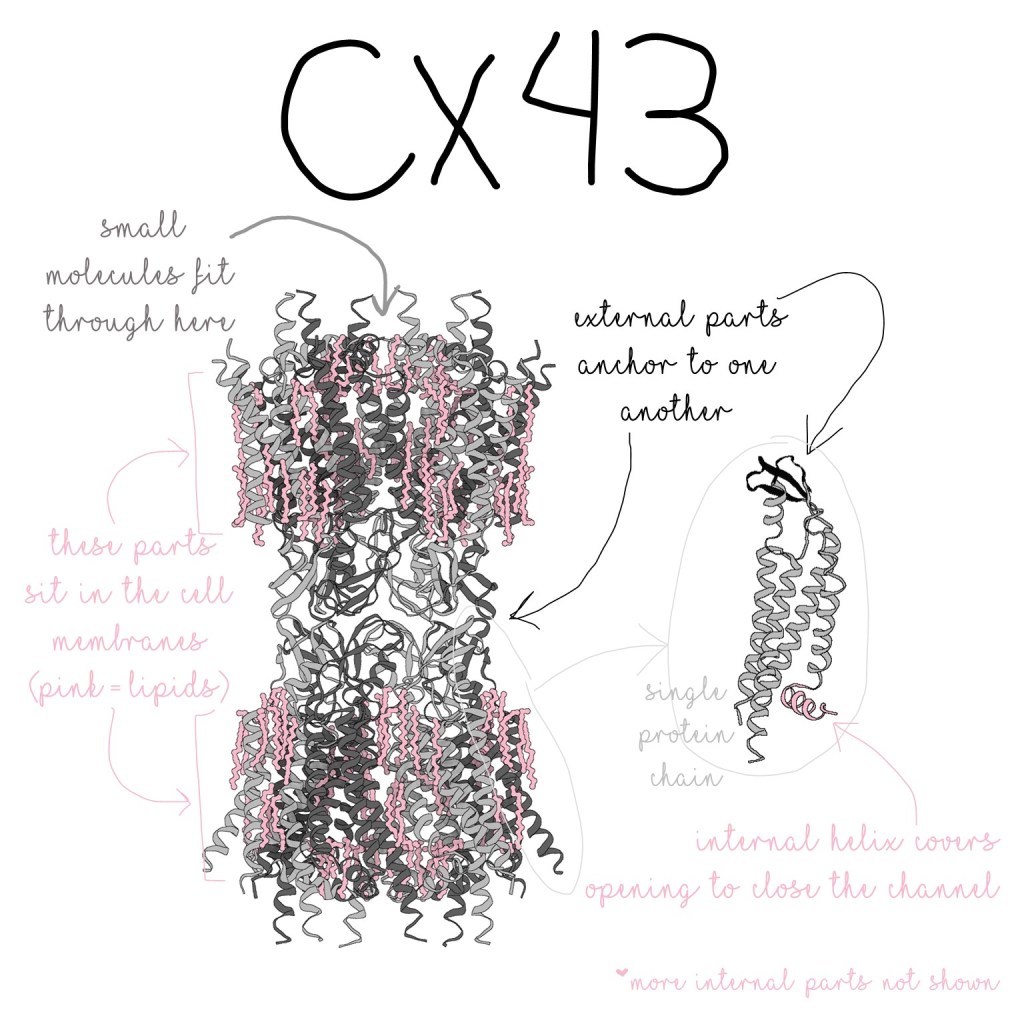
Cx43 is part of the connexin family of proteins. Connexins are located at the cell membrane where they primarily make up gap junctions. You can think of a gap junction as a tunnel connecting one cell to another. These allow small molecules to travel from one cell to the next very quickly–much, much faster than being exported from one cell and then imported to another. When those small molecules are signals, like ions, gap junctions facilitate virtually instant communication between connected cells.
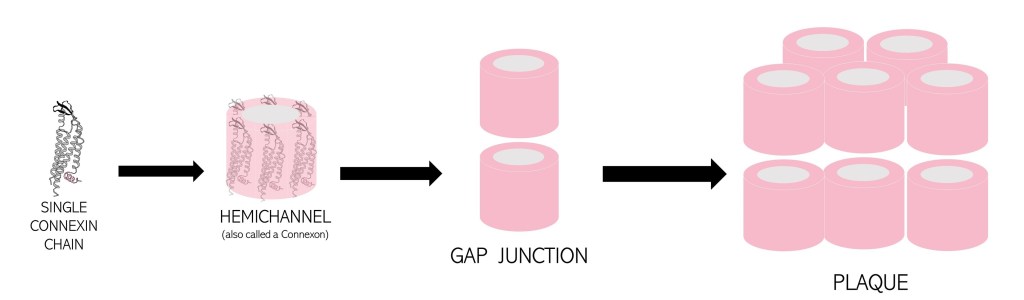
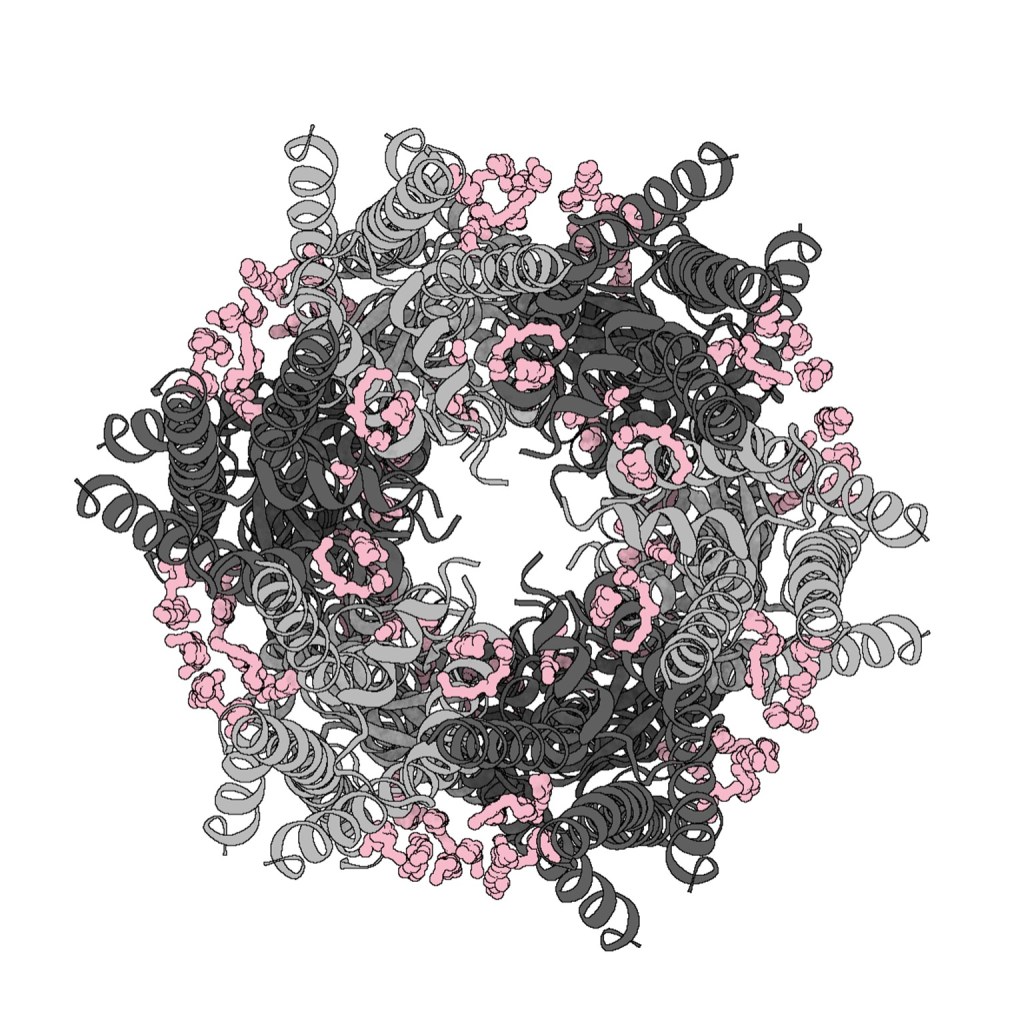
To form a gap junction, six connexins (like Cx43) come together to form a connexon, or hemichannel. When hemichannels on two different cells pair up, a gap function channel is formed. Multiple hemichannels can congregate to form a gap junction plaque.
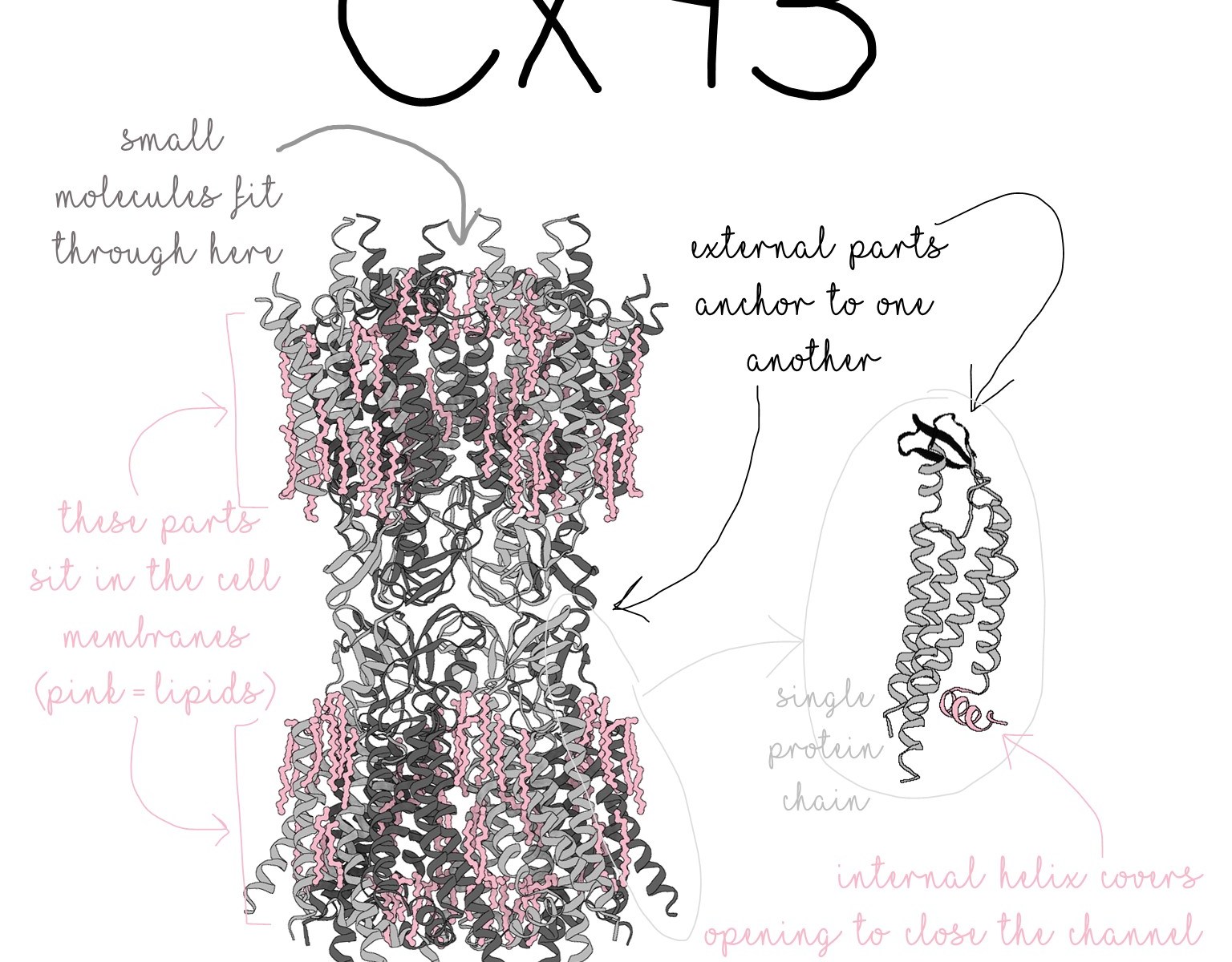
Each connexin also has a complex structure. For Cx43, the majority of the protein resides inside the cell’s cytoplasm, with four segments (called “domains”) anchoring the protein into the cell membrane. Two loops stick out of the cell.
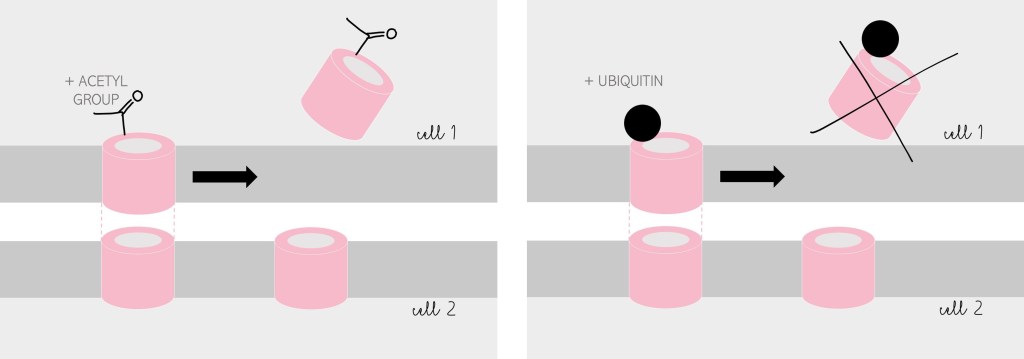
In biology, when it comes to communication, regulation and timing are key. You want your cells to be saying the right things at the right times, otherwise, chaos ensues. Since Cx43 is so heavily involved in cellular communication and signaling, it is no surprise that it is highly regulated. Several regulatory proteins add and remove different chemical groups from Cx43 to tell it when to work. Whether or not an acetyl group is attached to Cx43 decides whether it hangs out at the cell membrane doing its job or whether it leaves the gap junction. Adding ubiquitin to Cx43 triggers its “retirement” (breakdown/death).
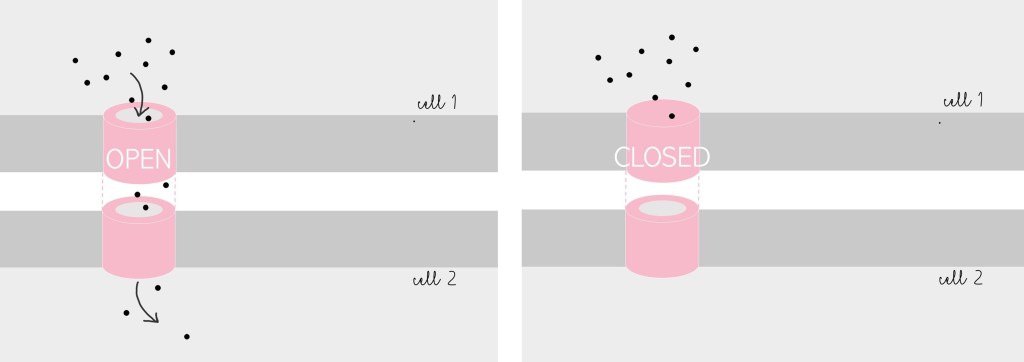
Active, working Cx43s also have to open and close access to the gap junction at appropriate times. Scientists call this “gating” (because opening and closing acts like a gate). Ion concentrations, charges and voltage, pH, and reactive oxygen species all influence the gating of Cx43. Gating also depends on the lipids in the membrane surrounding Cx43 and other proteins adding or removing phosphate groups to Cx43.
Oftentimes, proteins involved in signaling have short life spans to keep up with quickly-changing signals, and Cx43 is no exception. Cells are efficient protein-making factories, so generally it’s faster for a cell to instruct, “yes, keep making proteins, we need them!” than “no, those proteins are doing work we don’t want, get rid of them now!!” The first option doesn’t require big change to regular operations. The second option, though, requires activation of other protein head-hunters to go tag the proteins that need to be retired, then still other protein assassins to get rid of tagged proteins. A lot more effort.
Cx43 is also regulated at the gene level. The gene that codes Cx43–like all other genes–can be activated or repressed from giving instructions to produce Cx43 by several signals. Hormones are major signals for every cell in your body!
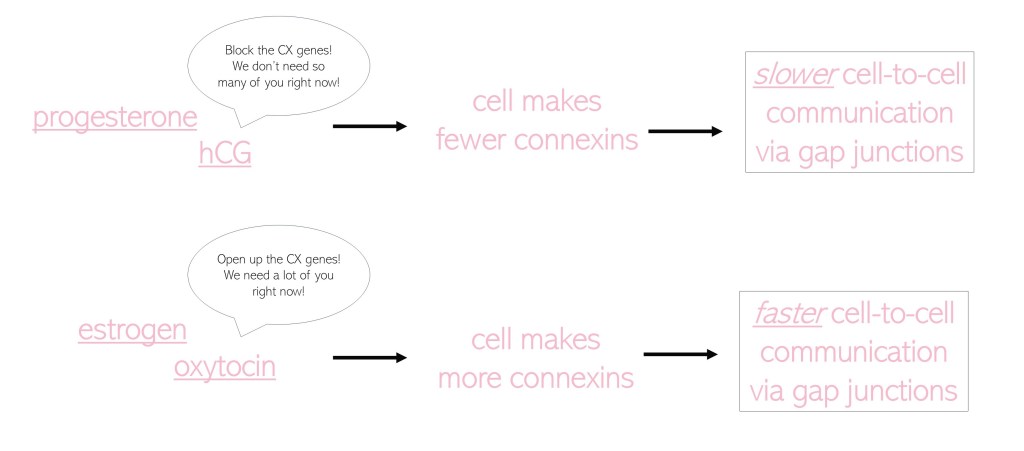
In pregnancy, progesterone and hCG (which you can read about here) suppress Cx43 production. At the end of pregnancy, progesterone levels decline and estrogen levels rise, resulting in more Cx43. The extra Cx43 prepares the uterine muscle cells to coordinate contractions in labor. Fast, practically instant communication keeps these cells working in unison.
Oxytocin, the “cuddle” hormone key to bonding and lactation, also promotes Cx43 production. Myoepithelial cells surround the mammary glands and, with the help of Cx43 to coordinate them, squeeze the glands to push out milk.
As a young mom and pregnant woman, of course these roles of Cx43 are particularly interesting to me. But they are by no means the only roles Cx43 or other connexins play in the body. Plenty of other body functions require connexin proteins to facilitate super-fast messages and keep many cells coordinated in their efforts! If you find any other functions of connexins that fascinate you, I would love to hear about them! Tell me in the blog comments below or send me an Instagram DM @science.magnifies
Ribeiro-Rodrigues TM, Martins-Marques T, Morel S, Kwak BR, Girão H. (2017). Role of connexin 43 in different forms of intercellular communication – gap junctions, extracellular vesicles and tunnelling nanotubes, J Cell Sci, 130 (21), 3619–3630.
M Kidder, G., & Winterhager, E. (2015). Physiological roles of connexins in labour and lactation, Reproduction, 150(4), R129-R136.
Structure: PBD 7F93
Lee HJ, Cha HJ, Jeong H, Lee SN, Lee CW, Kim M, Yoo J, Woo JS. (2023). Conformational changes in the human Cx43/GJA1 gap junction channel visualized using cryo-EM. Nat Commun, 14(1), 931.
 Science Magnifies