We live in an amazing world! When we dig into the details of nature, we find things that surprise us, make us curious, and often leave us bewildered. Even our best scientists only understand small pieces of the complexity of the world. I believe that there is a God who not only understands it all, but invented it all. And in my own scientific training, I have found that God thought of everything.
**I’m no astrophysicist, but I enjoy exploring what’s known about the origins of the universe and our home in it. The following content is presented in more detail by astrophysicist Dr. Hugh Ross in his book Navigating Genesis, as well as in many of his lectures. Here I simply offer a summary of what I’ve learned from him.**
Earth is an incredibly strange planet. Sure, there are things about Earth that strike our sense of curiosity as we wander its surface, but it isn’t just strange on its own. Earth is unlike any other planet in the universe. It’s riddled with odd, unlikely features, most of which make it uniquely possible for us to live here. One of these odd, unlikely features is our relatively thin atmosphere.
If you look at other planets, you will see a pattern: as planets get more massive and farther away from their stars, their atmospheres get thicker. Given our planet’s size, our atmosphere is supposed to be significantly thicker than it is. Earth’s gravity doesn’t follow different rules than other planets, so why does Earth buck the atmospheric trends?
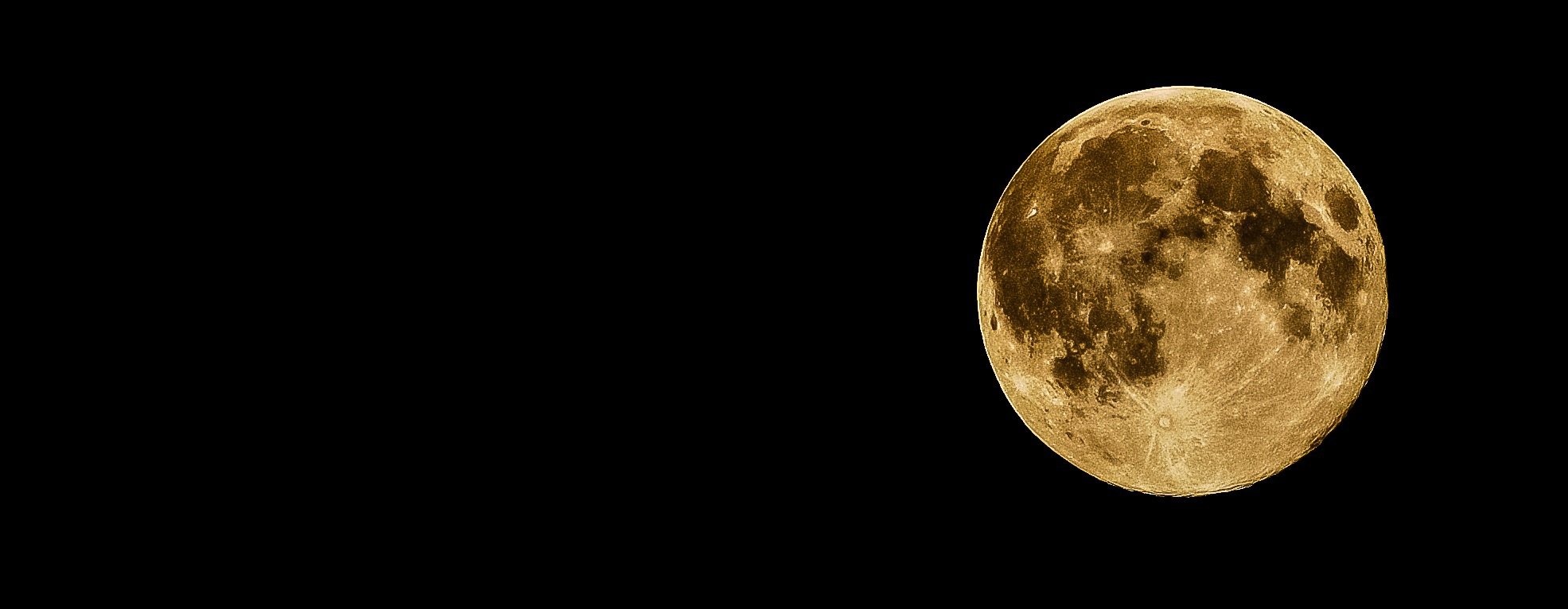
It turns out that not only is Earth strange, but the Moon is strange too. It’s weirdly large and weirdly young. The Moon is 50x bigger than other solar system moons, and while most moons are roughly the same age as their planets, the Moon measures 40 million years younger than Earth. The best models that explain the most Moon data attribute its weirdness to a collision. A giant, Mars-sized space rock crashed into Earth at just the right speed and just the right angle to push most of the atmosphere into outer space. Some of the debris was caught in orbit, forming the early Moon. Other debris permanently added to the mass of Earth.
This Moon-forming crash illuminated and stabilized what was previously a dark, chaotic, inhospitable wasteland. Something seemingly destructive and violent gave Earth a life-supporting environment unlike any other known planet. It is because of this crash that we can breathe Earth’s air and access sunlight needed for kick-starting sources of food! The crash also did some other good things for our planet like slowing its rotation and stabilizing its axis tilt. Earth’s mass increased, and therefore its gravity, just the right amount to hold sufficient amounts of water vapor in the atmosphere without holding on to toxic compounds like ammonia or methane. Without this specific event, Earth today would likely be not just human-less, but entirely lifeless.
Since I personally enjoy breathing, eating, and avoiding deadly gases, as well as existing in the first place, I am grateful that particular giant space rock collided with early Earth at that particular time. The Moon’s steady-changing glow in the night sky has a way of peacefully capturing our attention when it catches our eye. The Moon is beautiful. And the Moon is more than beautiful. It is “a miracle.”*
Dear God, thank you for sending that particular giant space rock towards our planet at the right time in the right way to create the Moon and make way for life! You are sovereign over all things in all moments and you have always worked for our good and your glory, even before we were here to know about it. May we trust that the crashes you ordain in the present day have good purpose just like the ones in the past. Amen.
*”Those who want to see a miracle are looking at one whenever they gaze up at the Moon.” Hugh Ross, Navigating Genesis, p. 49

